

Store Owners Guide – Product Management
Introduction to Product Management
In this guide I will show you, the online store owner or user, how to manage all the basic functions you will need to manage products in your store. This guide assumes you are using a desktop computer or tablet. You can also use your mobile phone to accomplish the exact same tasks but be mindful that the settings and layout will be different.
After signing in to your WordPress dashboard, select Products → All Products to manage your WooCommerce catalogue. Keep your login credentials private and use an account with suitable permissions.
Product Tab Navigation
From the All Products Tab, you will see all products in your store.
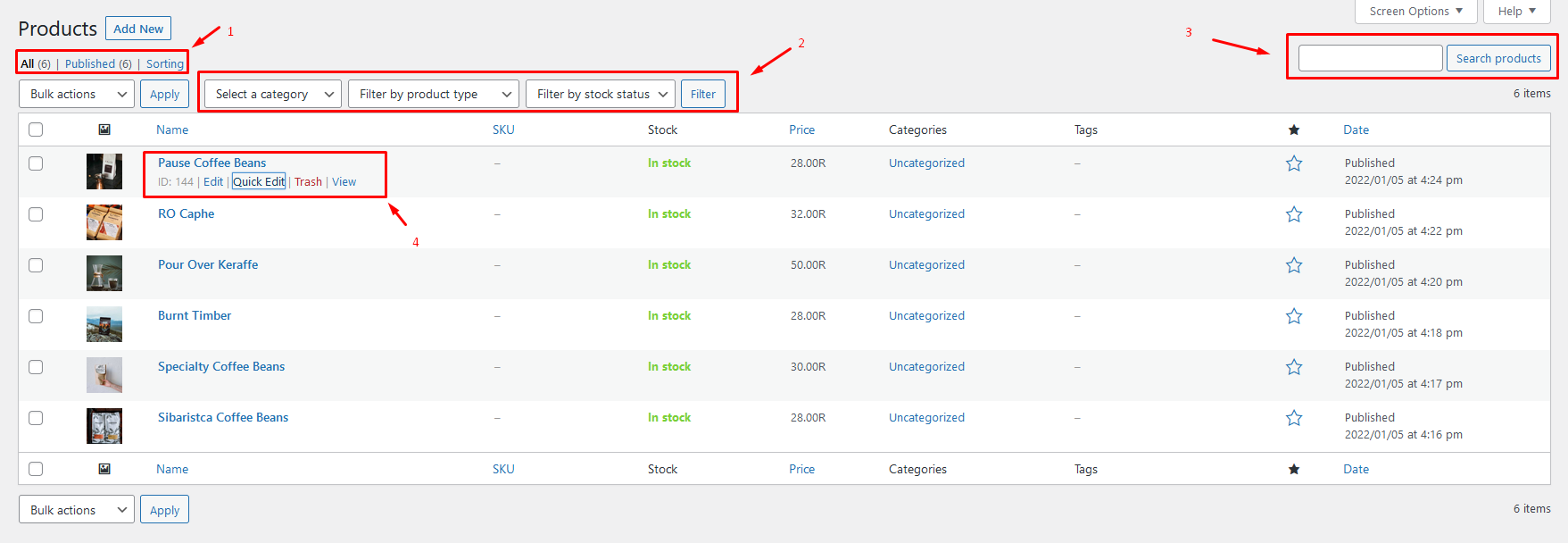
- Check that the All has been selected on the top just below the title Products. You may have unpublished products available and to prevent duplicates, select the All products so you have a full view of what’s in your store. As you get used to the interface, you can swap between the filters.
- There is also a select filter for stock, product type and category. This can be handy with larger stores with many products as well as quickly checking the relative product details.
- If you are searching for a particular product, you can use the search on the top right of the window. This will search within the title and description of the product.
- When you hover over a product, you will find product actions available for a specific product.
- Edit: this opens the product on a new window where you can modify all details of a product.
- Quick Edit: This expands the product on the same window without loading a new page that allows you to change some basic product details. This may save you time if you need to change certain details.
- Trash: moves a product to the trash rather than deleting it immediately. Recovery and permanent-deletion timing depend on your site’s settings.
- View: This will load a new window that displays the selected product as a customer would see it.
Quick Edit
The quick edit settings contain many but not all settings available for a product. Below are some important fields that you would need to know about.
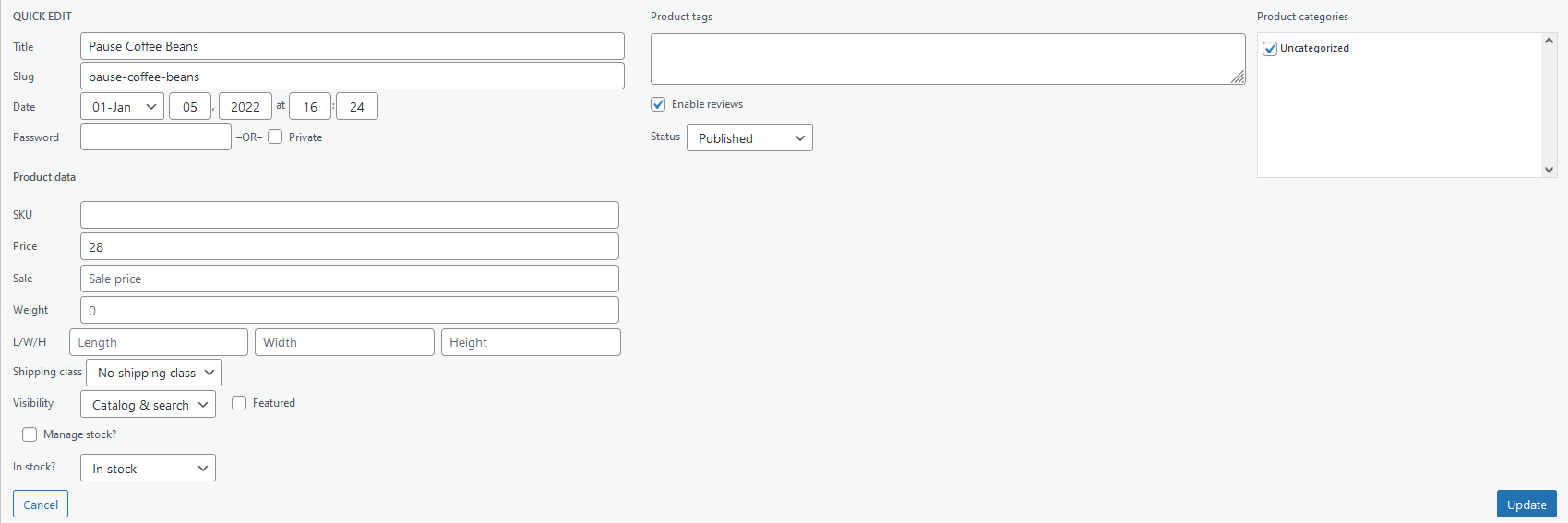
- Title: The visible product title on the product page
- Slug: forms part of the product URL. Avoid changing a live URL unless necessary, and arrange a redirect if the address changes.
- Price: This is the regular price of the product.
- Sale: This is an optional field. If used, this will be the actual selling price of the item. The regular price above will be the “before” price and will display in most cases as (
R1000R899). - Shipping Class: If you have shipping set by class, you can adjust it here.
- Manage Stock?: Use this if you want to set explicit stock levels.
- In stock?: You can manage if a product is in stock or not here. On back-order option means a customer can still purchase the product if you don’t have stock.
- Product Categories: You can easily change between existing product categories here. New categories need to be added from the Categories Tab on the left first.
When done, ensure you click on Update on the bottom right.
Full Product Editing
Descriptions
WooCommerce supports a main product description and a short description. The short description usually appears near the product’s price and buying controls, depending on the theme. Use the main description for fuller specifications and details.
The long description is generally at the bottom of the product page and used if you have many details you need to share.
Use a concise short description and a useful main description where possible. Avoid copying the exact same text into both fields when additional details could help shoppers.
Product data:
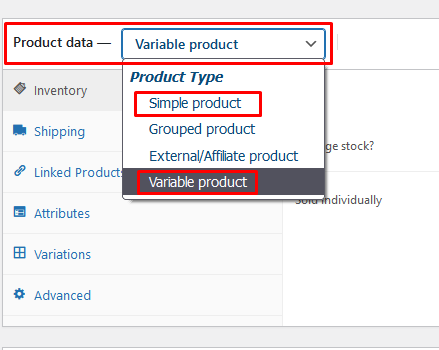
Under the product data section, the first option you will see is the drop down option where you will find simple and variable products. Product types determines the settings available for a product and how it is displayed on the front-end. The others are for more advanced use cases and can be ignored if you are starting out and selling physical products.
Simple Product
This, as the name suggests is just a simple product as you would expect.
Variable Product
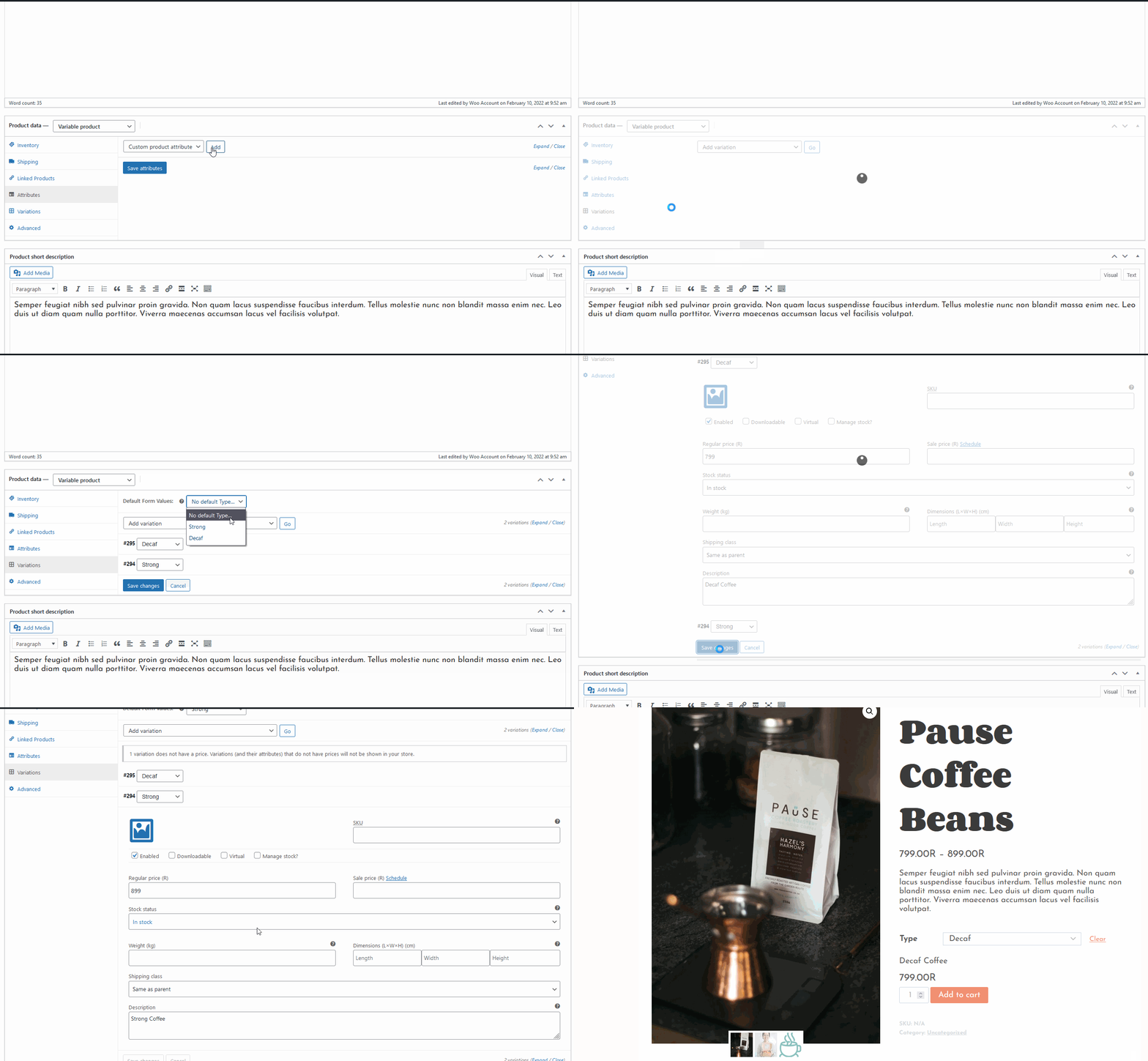
If you have a product that has different colours, sizes or other type of variation, instead of having multiple simple products in your store, you can have one product that allows the customer to make a desired selection.
When using this, you must first create attributes like size or colour under the attributes tab. Product stock, price and other specific settings will now be found under Variations.
Images
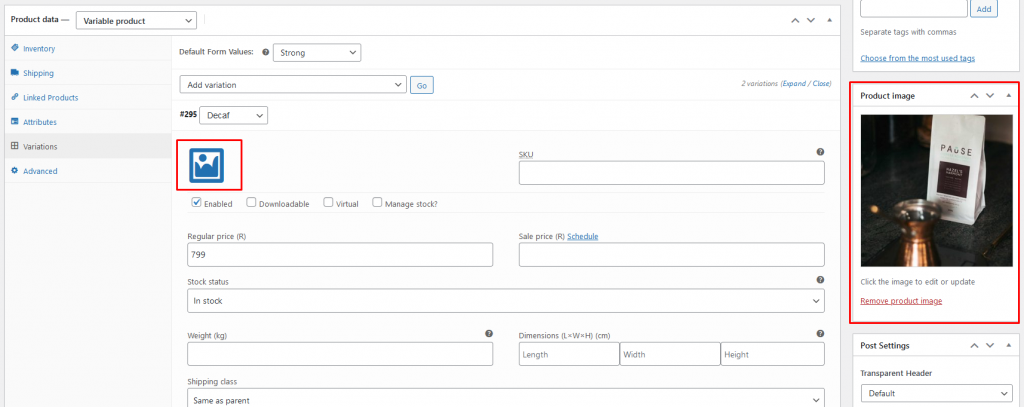
For simple products, you can add or remove images from the right-hand side Product Image panel. This will be with the primary image when you first open the product page. To add multiple images, scroll down to Image Gallery.
For Variable Products, under variation, click on the image icon to add an image for that variation. You would still be able to use the Product Gallery for pictures that apply to all variations.
Bulk Editing
Bulk editing saves time when applying the same changes to several products. Start with two or three items to check the results before making larger edits.
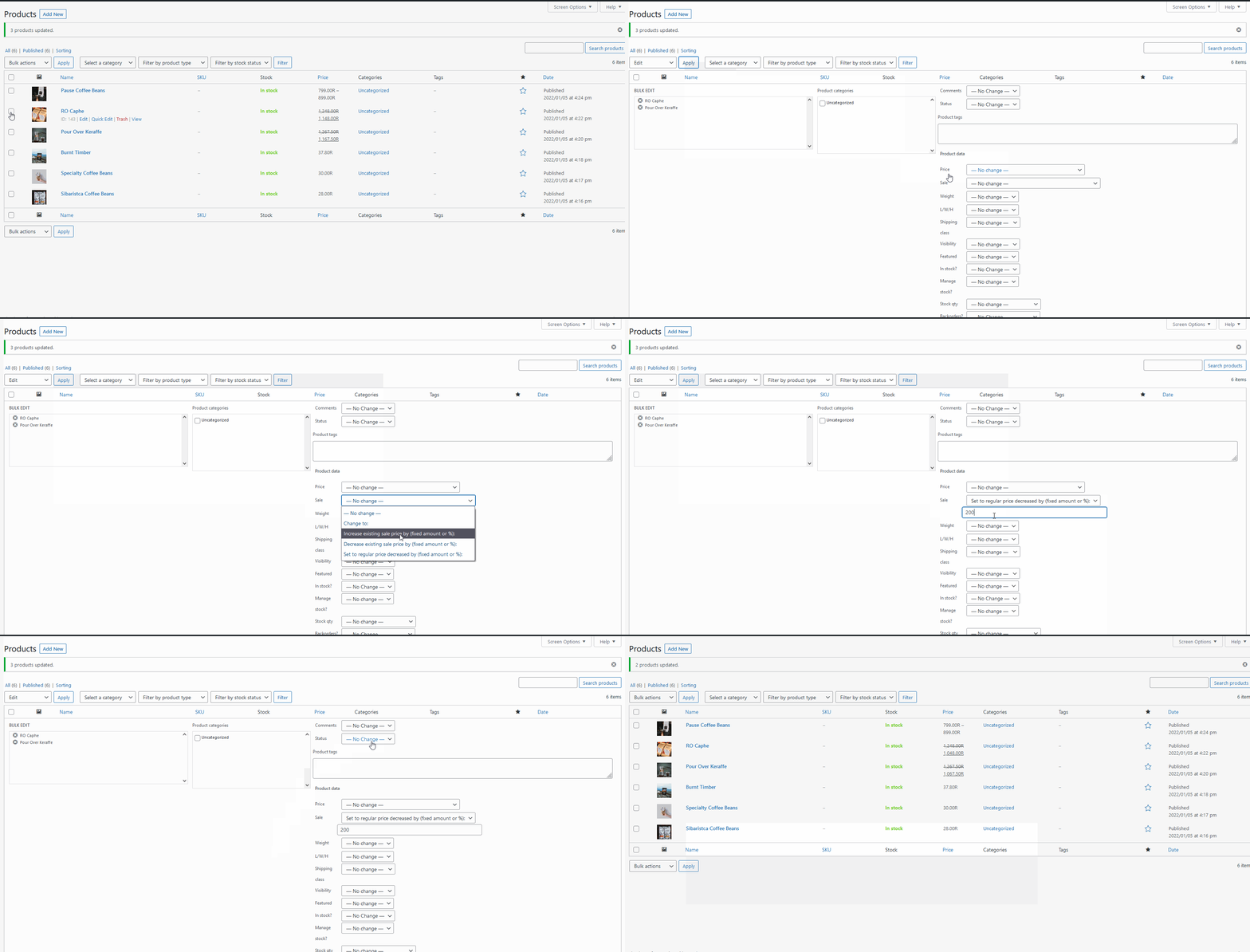
You can use the filter in conjunction with bulk editing to select the products that need to be edited.
Note: Bulk editing here implies changing all selected products to the same value for a selected field and NOT quickly editing many products with different values.
Summary
This covers all the basics you need to manage the products in your store. The more often you use it, the more experience you will get and later move onto more advanced settings that will really make your products and store stand out.
For current options and terminology, consult the official WooCommerce product management documentation.
If you’d like assistance setting up or improving a WooCommerce store, explore our eCommerce website design options. Our guide to starting an online store explains the platform choices.